For any serious home cook or professional butcher, a quality boning knife is an indispensable tool. Its specialized design, featuring a thin, often flexible blade, allows for precise maneuvering to separate meat from bone with minimal waste. The right boning knife makes tasks like deboning a chicken, filleting a fish, or preparing a roast not only easier but also significantly safer and more efficient.
With a market flooded with options, from Japanese Damascus steel to classic German workhorses, selecting the perfect blade can be daunting. This expert roundup cuts through the noise to present ten of the best boning knives available. We have analyzed blade composition, handle ergonomics, flexibility, and overall design to help you find the ideal instrument for your culinary needs.
Our Top Picks for the Best Boning Knives
- Shun Premier 6″ Boning/Fillet Knife
- Shun Classic 6″ Boning/Fillet Knife
- KYOKU Boning Knife – 7″ – Shogun Series
- Global 6 1/4 inch Flexible Boning Knife
- ZWILLING Professional “S” 5.5-inch Boning Knife
- Victorinox 6-Inch Curved Rosewood Boning Knife
- Dalstrong Fillet Knife – 6.5 inch – Phantom Series
- Mercer Culinary Genesis 6-Inch Boning Knife
- Wusthof 4603 Boning Knife, 6 Inch
- Victorinox Fibrox Pro Curved Boning Knife 6-inch
Shun Premier 6″ Boning/Fillet Knife

The Shun Premier Boning and Fillet Knife is a masterclass in Japanese cutlery, designed for intricate work. Its narrow, curved blade glides closely along bones and slices through fibrous tissue with exceptional control. The beautiful hammered tsuchime finish is not just for aesthetics; it creates air pockets that reduce drag and prevent food from sticking during use.
Crafted with a VG-MAX steel core and surrounded by 68 layers of Damascus cladding, this knife offers outstanding durability and a razor-sharp 16-degree cutting edge. This combination ensures superior sharpness that is built to last, making it a reliable tool for both fish and meat preparation.
Shun Classic 6″ Boning/Fillet Knife

As part of the original series that introduced authentic Japanese cutlery to the U.S., the Shun Classic Boning Knife represents pioneering excellence. It is expertly designed to move through meat and fish with precision and ease, making it a foundational tool for any well-equipped kitchen. The blade’s profile is optimized for getting into tight spaces around joints and bones.
Like its Premier sibling, it features the superior VG-MAX steel core and 68-layer Damascus cladding, delivering the same razor-sharp 16-degree edge for long-lasting performance. The main distinction lies in its classic, sleek finish, offering a more traditional and understated aesthetic.
KYOKU Boning Knife – 7″ – Shogun Series
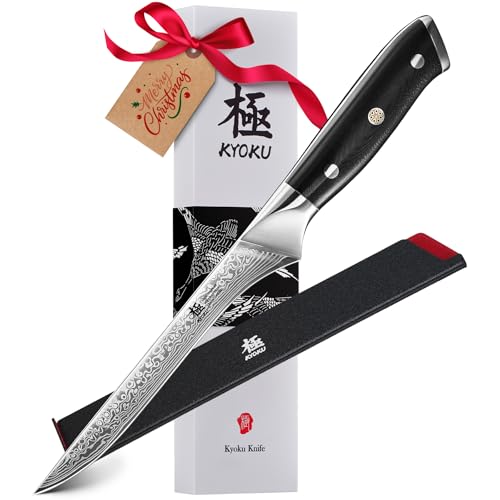
The KYOKU Shogun Series boning knife is a robust and versatile tool, featuring a 7-inch blade that provides excellent leverage. Manufactured with an ultra-sharp VG-10 Japanese Damascus steel core, it offers incredible edge retention and is easier to sharpen than many other high-carbon steels. This Honesuki-style blade is designed for efficient meat preparation, including deboning, trimming, and butterflying.
Its handle is constructed from military-grade G10 material, making it extremely impervious to heat, moisture, and cold. This ensures a secure, comfortable grip and life-long sturdiness, even in demanding kitchen environments. The knife also comes with a protective sheath for safe storage.
Global 6 1/4 inch Flexible Boning Knife
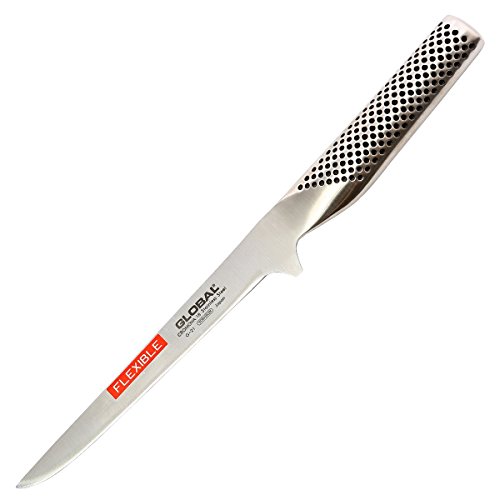
Global knives are renowned for their unique, all-metal design and exceptional sharpness. This 6 1/4-inch boning knife is no exception, featuring a lightweight and perfectly balanced construction. The blade is notably flexible, allowing it to contour perfectly to bones and fillet fish with remarkable precision and control.
The edge is made from high-quality Japanese stainless steel, which retains its razor sharpness exceptionally well. The handle is molded from the same piece of steel as the blade, creating a seamless, hygienic design with a dimpled surface for a safe and comfortable grip, even with wet hands.
ZWILLING Professional “S” 5.5-inch Flexible Boning Knife
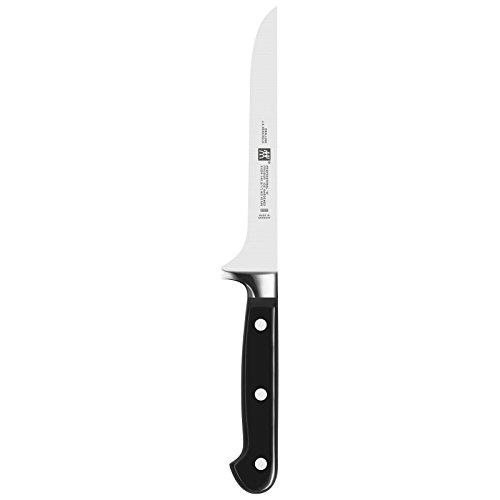
Manufactured in Germany, the ZWILLING Professional “S” boning knife is a testament to European engineering and durability. The knife is forged from a single piece of special formula high-carbon, no-stain steel using the SIGMAFORGE process, resulting in a robust and seamless tool. Its 5.5-inch blade offers a shorter length for enhanced control in detailed work.
The blade’s flexibility is ideal for tasks requiring a blade that can bend around contours, such as removing skin from fish or deboning poultry. This knife is built for professional use, promising longevity and consistent performance in a busy kitchen.
Victorinox 6-Inch Curved Rosewood Boning Knife
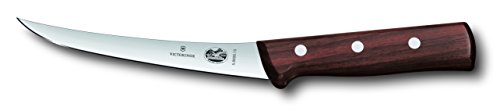
This Victorinox knife combines professional functionality with classic, natural beauty. The curved, semi-stiff stainless steel blade is designed to follow the natural contours of meat, effortlessly cutting through tendons and fat. It provides a good balance of flexibility and rigidity, making it suitable for a wide range of boning tasks.
The handle is crafted from naturally strong and heavy rosewood, chosen for its crack resistance and unique grain patterns. Each handle is distinct, offering a comfortable and secure grip that will not discolor or corrode over time, developing a rich patina with use.
Dalstrong Fillet Knife – 6.5 inch – Phantom Series

The Dalstrong Phantom Series fillet knife is a powerhouse tool that balances elegance with exceptional performance. Precision forged from a single piece of high-carbon Japanese AUS-8 steel, it boasts a razor-sharp edge honed to an acute 13-15 degrees. The blade is nitrogen cooled for enhanced hardness and corrosion resistance.
Featuring a full tang and an ergonomic bolster for a secure pinch grip, this knife offers excellent control and balance. The agile, hollow-ground blade is tapered to minimize drag, ensuring swift and precise cuts. It comes with a handsome Pakkawood handle and a protective sheath.
Mercer Culinary Genesis 6-Inch Flexible Boning Knife

The Mercer Culinary Genesis is a top choice for both culinary students and professionals seeking reliable performance at an accessible price point. The knife is precision-forged from high-carbon German steel, ensuring better durability and a long-lasting, taper-ground edge.
Its ergonomic handle is designed for comfort and provides a non-slip grip, even when wet. This makes it ideal for prolonged use during tasks like deboning chicken, ham, and fish or for trimming fat and sinew. It represents outstanding value and professional-grade construction.
Wusthof 4603 Boning Knife, 6 Inch

Wusthof is a legendary name in cutlery, and this 6-inch boning knife upholds that reputation. Forged from a single piece of high-carbon stainless steel, it offers remarkable strength and edge retention. The blade is designed with a narrow profile for precise control when working around bones and joints.
The handle is made from highly durable polyoxymethylene (POM) and is riveted for stability. It provides a comfortable and secure hold with a traditional look and feel. This knife is a classic, no-nonsense tool built for accuracy and longevity in the kitchen.
Victorinox Fibrox Pro Curved Boning Knife 6-inch
A staple in professional kitchens worldwide, the Victorinox Fibrox Pro is celebrated for its exceptional performance and value. The curved, semi-stiff blade is made from high-carbon stainless steel, allowing it to maintain a sharp edge through rigorous use. It expertly navigates around bones to separate meat cleanly.
The Fibrox handle is the standout feature, engineered to be non-slip even when covered with grease or water. It is comfortable to hold and reduces hand fatigue during extended prep sessions. This knife is a workhorse, offering professional-grade functionality that is both reliable and affordable.
Buying Guide: How to Choose the Right Boning Knife
When I’m looking for a new boning knife, the first thing I consider is the blade flexibility. This isn’t a one-size-fits-all situation. For working around bones and joints on larger animals like beef or pork, I prefer a stiffer blade. It gives me more control and power for making precise cuts without the blade bending. On the other hand, when I’m dealing with smaller, more delicate tasks like filleting a fish or deboning a chicken, a flexible blade is my best friend. It allows me to glide along the contours of bones and through sinew with a smooth, clean motion, minimizing waste.
Next up is the blade shape, and the main choice here is between a curved and a straight edge. I find a curved blade, often called a “recurve,” to be incredibly efficient. The curved design creates a sort of rocking motion that helps with slicing through connective tissue. A straight-edged blade is fantastic for making long, clean, and straight cuts, which is often needed when breaking down larger primal cuts. Some knives even feature a slight curve at the tip, which I find useful for making initial punctures and detailed work.
The handle might seem like a secondary thought, but it’s critical for safety and comfort. I always look for a handle that provides a secure, non-slip grip, even when my hands are wet and greasy. Materials like textured plastic, rubberized composites, or shaped wood are excellent choices. The balance of the knife is also tied to the handle. A well-balanced boning knife feels like an extension of my hand, reducing fatigue during long prep sessions. I make sure the handle fits comfortably in my grip and that the transition from the blade to the handle (the tang) is smooth and secure.
Finally, let’s talk about steel. High-carbon stainless steel is my go-to. It offers a great balance: it holds a sharp edge for a long time and resists rust and staining much better than plain carbon steel, which is important in a kitchen environment. The tang is another key factor. A full tang, where the steel of the blade runs the entire length of the handle, is a sign of durability and better balance. It simply makes for a stronger, more reliable tool. By thinking about these factors—flexibility, shape, handle, and steel—you can find a knife that feels like it was made for your hand and your specific tasks. This guide to the 10 best boning knives should help you make an informed decision.
Frequently Asked Questions
What is the difference between a boning knife and a fillet knife?
This is a common point of confusion. While they look similar, the key difference is flexibility. A boning knife is typically stiffer and used for separating meat from the bone on land animals like chicken, pork, and beef. A fillet knife is much more flexible and is designed specifically for the delicate work of removing skin and bones from fish without tearing the fragile flesh. Some all-purpose boning knives fall in the middle, but the distinction in flexibility is the main thing I look for.
How often should I sharpen my boning knife?
How often you sharpen depends on how frequently you use it. With regular home use, you might only need a proper sharpening every few months. However, I hone the edge with a sharpening steel before or after every use. Honing realigns the microscopic edge of the blade, keeping it sharp and effective between full sharpenings. If you find the knife is tearing meat instead of slicing cleanly, it’s definitely time for a sharpen.
Can I use a boning knife as a general-purpose kitchen knife?
I wouldn’t recommend it. A boning knife is a specialist tool designed for one job: separating meat from bone. Its thin, narrow blade isn’t suited for chopping vegetables or slicing bread. Using it for general tasks can damage the fine edge and is less efficient. It’s best to keep it as part of your knife collection and use a chef’s knife for most other kitchen work.
What length of boning knife is best?
For most tasks, a blade between 5 and 7 inches is perfect. A 5 or 6-inch knife offers great control for poultry and smaller cuts, which is what I use most often at home. If you frequently work with large roasts or big fish, a 7 or even 8-inch blade can be helpful for making longer, uninterrupted cuts. It’s all about matching the tool to the size of the job.
Is a more expensive boning knife always better?
Not necessarily. While high-priced knives often use premium materials and offer exceptional craftsmanship, there are many mid-range options that perform brilliantly for the home cook. You’re often paying for factors like brand name, specific steel alloys, or handle aesthetics. A well-made knife from a reputable brand in the mid-price range is usually more than sufficient. Reading expert reviews on the 10 best boning knives can help you find a high-quality option that fits your budget.