A sharp knife is a safe and efficient knife, but even the best blades lose their edge alignment with regular use. That’s where a honing steel, or sharpening rod, becomes an indispensable kitchen tool. Unlike a sharpener that grinds away metal, a honing steel realigns the microscopic teeth along the blade’s edge, restoring its cutting performance in seconds. Choosing the right rod for your knives and skill level can make all the difference in maintaining your investment and enjoying a superior cutting experience.
With options ranging from traditional steel and ceramic to diamond-coated rods, the choices can be overwhelming. Factors like length, material, handle comfort, and intended use all play a role. This roundup highlights nine excellent honing steels, from budget-friendly picks to professional-grade tools, to help you find the perfect match for your kitchen.
The Best Honing Steels for Knife Maintenance
- TUO Honing Rod, Sharpening Steel with Larger Diameter
- Kota Japan 12 in. Diamond Carbon Steel Professional Knife Sharpener Rod
- Utopia Kitchen Knife Sharpener Rod 12 Inch
- Shun Cutlery Sora 9″ Combination Honing Steel
- Professional 10.5 Inch Ceramic Sharpening Rod
- ZWILLING 10-inch Diamond Sharpening Steel
- Messermeister 12” Ceramic Sharpening Rod
- Wusthof 10-Inch Fine Edge Honing Steel
- Victorinox 12-Inch Fibrox Pro Curved Honing Steel
TUO Honing Rod, Sharpening Steel with Larger Diameter
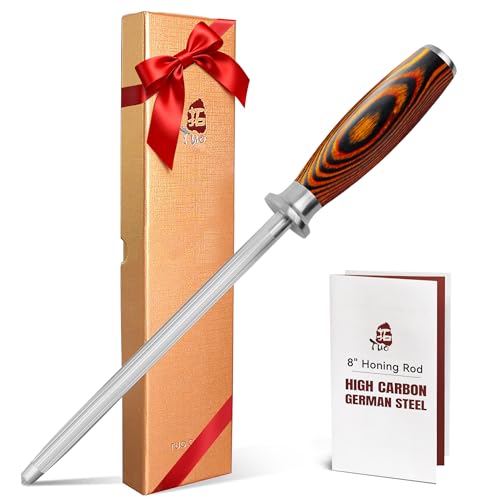
The TUO Honing Rod is designed for quick, daily maintenance to keep your knife’s edge in peak condition. Its primary function is to realign the edge with minimal metal removal, which helps preserve the blade’s longevity compared to more abrasive sharpening methods. This approach makes it a smart choice for routine upkeep between less frequent full sharpenings.
This rod stands out with its thicker 0.48-inch core, which provides about 35% more surface area for efficient honing. Constructed from high-carbon steel with a 62 HRC hardness, it is durable enough to maintain even hardened steel knives. The 8-inch length is optimized for storage, fitting neatly into most kitchen drawers or knife blocks without taking up excessive space.
Kota Japan 12 in. Diamond Carbon Steel Professional Knife Sharpener Rod
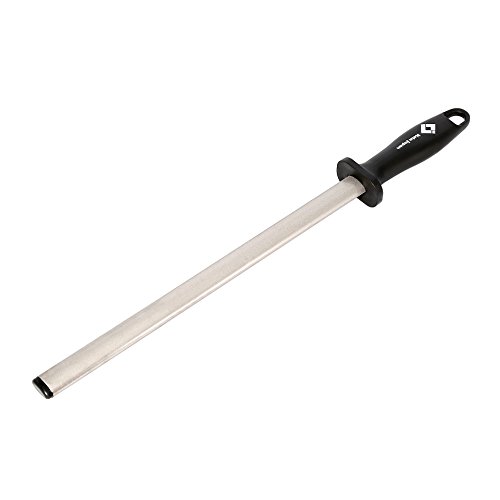
For those needing to restore a noticeably dull edge, the Kota Japan Diamond Rod is a powerful tool. Its state-of-the-art diamond electroplating is highly abrasive, allowing it to remove metal efficiently and sharpen blades quickly. This makes it suitable not just for kitchen knives but also for hunting and other tool blades that require more aggressive edge correction.
The oval shape of the rod is a thoughtful design feature intended to increase sharpening efficiency by providing a better contact angle. A significant benefit noted is its “lighter touch,” meaning it requires less downward force from the user compared to some traditional steels. This combination of aggressive material and user-friendly design can lead to effective, long-lasting results with less effort.
Utopia Kitchen Knife Sharpener Rod 12 Inch

The Utopia Kitchen 12-inch rod offers a versatile and user-friendly honing solution at an accessible price point. Its carbon steel core is plated with nickel-chrome, creating a fine surface that helps realign the knife edge without causing excessive damage. This design aims to restore dull knives to a sharp state effectively, working on both standard and serrated edges.
Practicality is a key focus with this model. It includes a hanging hook for convenient storage, keeping it within easy reach. The ergonomic handle is designed to fit comfortably in either hand, and the slip-resistant rubber base helps keep the rod firmly in place on your counter during use, promoting safety and control.
Shun Cutlery Sora 9″ Combination Honing Steel
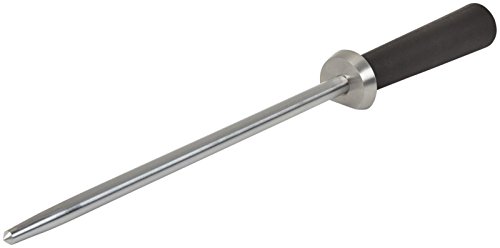
The Shun Sora Combination Honing Steel is expertly crafted for precision, particularly benefiting owners of Japanese-style knives. Its most notable feature is the built-in angle guide, which helps users maintain a consistent 16-degree angle during honing. This is the typical angle for many Japanese blades and ensures the sharpening contact is correct for optimal edge alignment.
This rod offers a dual-sided honing approach. One side is smooth, intended for weekly maintenance to straighten the edge. The other side is micro-ribbed, designed for monthly use to provide a slightly more aggressive realignment. The quality pakkawood handle provides a secure and comfortable grip, making this a specialized tool for dedicated cooks.
Professional 10.5 Inch Ceramic Sharpening Rod

Ceramic honing rods are favored for providing a very fine finish on a knife’s edge. This 10.5-inch model, forged with black Japanese ceramic, is harder than steel and creates a smooth, polished edge. It is excellent for final tuning and regular maintenance of already sharp knives, helping to extend the time between full sharpenings.
The rod features an ergonomic wood handle that offers a comfortable, secure grip during use. Sold with a gift box and instructions manual, it is presented as a ready-to-give item for a cooking enthusiast. Ceramic rods are brittle, however, so careful handling and storage are important to prevent chipping or breakage.
ZWILLING 10-inch Diamond Sharpening Steel

ZWILLING is a respected name in cutlery, and their 10-inch Diamond Sharpening Steel reflects that heritage. The diamond-coated surface is highly effective at quickly restoring a sharp edge, acting faster than traditional smooth steel rods. It’s an ideal tool for refreshing edges that have become dull from regular use.
A key design aspect is its flat surface, as opposed to a round or oval rod. This flat profile provides more consistent contact with the knife’s edge, allowing the user to achieve desired results with fewer strokes. This efficiency makes it a time-saving tool for both professional and home kitchens that demand reliable performance.
Messermeister 12” Ceramic Sharpening Rod

The Messermeister 12-inch Ceramic Rod is built for a specific purpose: fine alignment and polishing. With its 1200 grit rating, it is one of the finest ceramic rods available, designed not to aggressively sharpen but to perfect and maintain an already good edge. The durable black ceramic material is noted for being tougher than conventional white ceramic.
This rod features a solid ceramic core that is break-resistant and provides a large, round sharpening surface. The ergonomic handle includes a hang ring for easy storage. Its length makes it suitable for longer chef’s knives, and its fine grit makes it an excellent final step in knife care routine.
Wusthof 10-Inch Fine Edge Honing Steel
Wusthof is synonymous with German precision engineering, and their 10-Inch Fine Edge Honing Steel is a classic choice for maintaining their own knives and other Western-style blades. These rods are typically designed to match the common 20-degree edge angle found on German and European knives, providing ideal support for realignment.
Known for their balance and durable construction, Wusthof honing steels often feature a fine, polished surface that gently straightens the blade’s edge. The handles are designed for a secure grip, and the overall build quality ensures the tool will last for years. It represents a reliable, no-fuss option from a trusted manufacturer.
Victorinox 12-Inch Fibrox Pro Curved Honing Steel
The Victorinox Fibrox Pro Honing Steel brings the brand’s famous ergonomic handle technology to knife maintenance. The Fibrox handle is textured to be highly slip-resistant, even when wet, providing exceptional control and safety during the honing motion. This is a significant benefit for a task that requires precise angles and movements.
At 12 inches long, it comfortably accommodates large chef’s knives. The curved profile of the rod is designed to match the natural arc of a knife’s edge as it is drawn across the steel, which can make the honing action feel more intuitive and effective for some users. It’s a professional-grade tool built for frequent use.
How to Choose the Best Honing Steels for Kitchen Knives
Let’s be honest, shopping for a honing steel can feel confusing. They all look like metal rods, but the differences matter a lot for your knives. I’ve learned that picking the right one isn’t about getting the fanciest option, but the one that matches your blades and your habits. Here’s what I always consider.
First, you need to decide on the surface. A smooth, polished steel is gentle and best for very hard, brittle steels like those in high-end Japanese knives. They realign the edge without removing much material. A grooved or ridged steel is more aggressive and works well on softer, more forgiving steels common in many Western-style knives. Diamond-coated steels are the most aggressive; they actually remove a tiny bit of metal to form a new edge, acting more like a sharpener. I only use mine when a regular honing steel isn’t doing the trick anymore.
Length and grip are practical concerns. Your steel should be at least as long as your longest chef’s knife, usually 10 to 12 inches. A shorter steel is awkward and unsafe. The handle is where you interact with the tool, so it needs to be secure and comfortable. Look for a solid guard between the handle and the rod to protect your fingers. A handle with a non-slip material, whether it’s a textured polymer, wood, or rubber, makes the process much safer and more controlled.
Finally, think about maintenance and durability. A honing steel doesn’t require much care, but the rod itself should be well-made. Ceramic rods are very hard and excellent for fine edges, but they are brittle and can snap if dropped. Metal rods are tough and durable. No matter which you choose, storing it safely in a block or on a magnetic strip is key. The goal is to find a tool that feels like a natural extension of your kitchen routine, keeping your best honing steels for kitchen knives ready for action every day.
FAQ
How often should I use a honing steel?
I recommend giving your knives a few light passes on the steel before you start any major prep work. For a home cook using their knives regularly, this might mean 2-3 times a week. It’s a quick 30-second habit that maintains the sharpness. If you feel your knife dragging while cutting a tomato or pepper, it’s definitely time for a hone.
Can a honing steel ruin my knives?
It can if you use the wrong type or incorrect technique. Using a very aggressive diamond or coarse steel on a hard, delicate Japanese blade can chip the edge. Similarly, using the wrong angle (like a very steep one) will dull the knife rather than align it. Match the steel’s abrasiveness to your knife’s hardness and practice maintaining a consistent 15-20 degree angle.
What’s the difference between honing and sharpening?
This is the most common mix-up. Honing is regular maintenance. Think of the edge of your knife as a series of microscopic teeth that bend out of alignment with use. The steel pushes these teeth back into line. Sharpening is the process of actually grinding away metal to create a new, sharp edge when honing no longer works. You hone frequently, but only sharpen a few times a year.
Are ceramic rods considered honing steels?
Yes, they perform the same function but are made from a different material. Ceramic is harder than steel, so it’s excellent for refining and aligning edges on very hard knives. It’s also slightly abrasive, so it removes a minuscule amount of metal. I treat my ceramic rod with extra care because it can break if dropped on a hard floor.
Do I need both a honing steel and a sharpener?
Absolutely. They are a team for complete knife care. The honing steel is your daily or weekly tool to keep the edge performing well. When the steel no longer restores a sharp feel, it means the edge is worn out and needs to be recreated through sharpening on a whetstone or professional system. Relying on just one will not give you the best results.