For gardeners, farmers, weather enthusiasts, and anyone who likes to keep a precise record of precipitation, a reliable rain gauge is an essential tool. Moving beyond simple guesswork, the right gauge provides accurate data to inform watering schedules, track local climate patterns, and satisfy personal curiosity. With options ranging from basic manual tubes to sophisticated digital systems, choosing the best one depends on your needs for accuracy, convenience, and features.
This roundup examines ten of the best rain gauges available, highlighting the strengths of each model. Whether you prioritize high-tech wireless alerts, durable professional-grade construction, or simple, easy-to-read functionality, there is an ideal choice here to help you measure every drop with confidence.
Our Top Picks for Accurate Rain Measurement
- AcuRite Wireless Digital Rain Gauge
- Outdoor Home Rain Gauge – Professional 6 Inch
- Netatmo Weather Station Rain Gauge
- Taylor Capacity Jumbo Rain Gauge
- La Crosse Technology Wireless Rain Gauge Weather Station
- TAMIDN Outdoor Rain and Snow Gauge
- AcuRite 5″ Easy-to-Read Magnifying Rain Gauge
- Taylor 2708 Jumbo JR Rain Gauge
- JMBay Rain Gauge Outdoor with Stake
- Backyard Weather Station Rain Gauge by La Crosse Technology
AcuRite Wireless Digital Rain Gauge

This digital gauge offers modern convenience for serious weather tracking. Its wireless, self-emptying collector transmits data to an indoor display, providing current rainfall, history, and even the date and time. You can program custom rain alarms for specific rates or flood watch conditions, giving you advanced notice for your garden or property.
The system requires minimal maintenance due to the self-emptying mechanism and provides measurements in both inches and millimeters. It’s an excellent choice for users who want detailed, historical precipitation data without having to manually check and empty a gauge after every storm.
Outdoor Home Rain Gauge – Professional 6 Inch

Built for durability and simplicity, this Australian-made rain gauge is designed to last. Its high-quality polycarbonate plastic construction resists cracking, yellowing, and clouding from long-term sun exposure. With a 6-inch (150mm) capacity and clear dual scales, it handles most rainfall events accurately.
Installation is straightforward with the included mounting bracket and screws, allowing you to securely attach it to a fence or deck post. This model is a reliable, no-frills tool perfect for gardeners and homeowners who need a sturdy, long-lasting gauge for consistent seasonal tracking.
Netatmo Weather Station Rain Gauge

This rain gauge is a smart accessory designed to integrate seamlessly with the Netatmo Smart Weather Station ecosystem. It wirelessly sends real-time rainfall data directly to your smartphone app, allowing you to check conditions remotely. The app also stores your data history, enabling you to track rainfall trends over days, months, or years.
It’s an ideal add-on for users already invested in the Netatmo system who want to complete their home weather monitoring setup. The focus is on connectivity and long-term data analysis, making it a powerful tool for dedicated weather enthusiasts.
Taylor Capacity Jumbo Rain Gauge
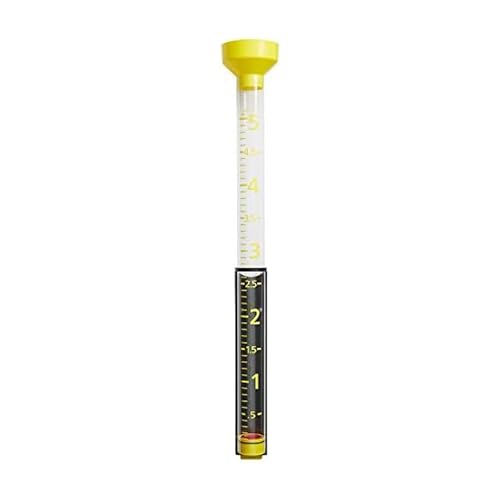
Visibility is the key feature of this classic Taylor gauge. Standing 25 inches tall with a bright red floating indicator, it can be read from up to 50 feet away. The 5-inch capacity measures in precise 1/10-inch increments, providing accurate data for gardening or educational purposes.
Thoughtful design elements include a funnel filter to minimize debris and a removable bottom cap for easy cleaning. Its large size and clear markings make it a popular choice for backyards and school projects where easy long-distance reading is important.
La Crosse Technology Wireless Rain Gauge Weather Station

This system combines rainfall tracking with temperature monitoring in a single station. The outdoor sensor features a self-emptying rain bucket that uses internal tilting cups for measurement, sending data wirelessly to the indoor console. You can monitor both indoor and outdoor temperatures alongside rainfall.
A useful feature is the rainfall history graph, which allows you to view precipitation data from the last seven days, weeks, or months. It’s a comprehensive option for users who want a broader view of their local weather conditions beyond just rainfall.
TAMIDN Outdoor Rain and Snow Gauge
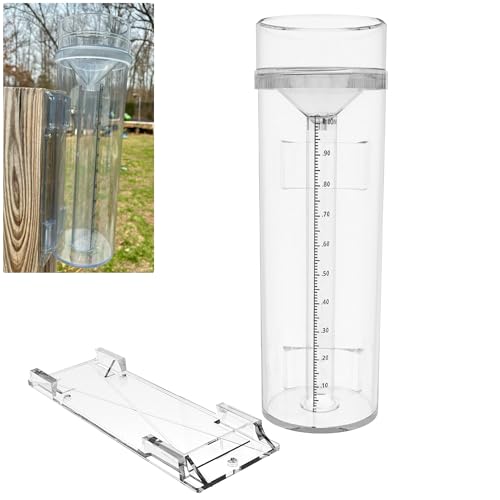
Engineered for precision and durability, this gauge offers measurements accurate to 1/100th of an inch and can hold up to 11 inches of precipitation, making it suitable for snow measurement as well. It is constructed from UV and heat-resistant polycarbonate to withstand harsh weather without fading or becoming brittle.
The included quick-connect bracket allows for very simple installation and secure mounting. This model is built for users who need highly detailed data and a rugged design capable of performing reliably in extreme sun, rain, or frost throughout the year.
AcuRite 5″ Easy-to-Read Magnifying Rain Gauge
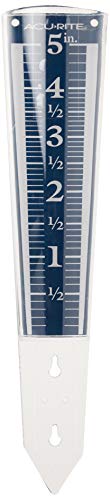
This basic analog gauge uses a clever magnifying design to make readings effortless. The numbers and inch markings are magnified by over 35%, and the white markings against the clear tube provide excellent contrast. It has a standard 5-inch capacity for measuring rainfall.
Its simplicity is its strength—there are no batteries or complex setups. Just place it in an open area and read the results. It’s a very affordable and user-friendly option for casual gardeners or as a first weather tool for children.
Taylor 2708 Jumbo JR Rain Gauge
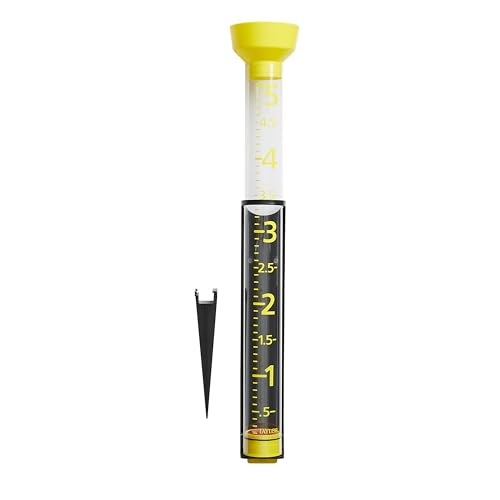
A slightly smaller sibling to the classic Jumbo model, the Jumbo JR stands 20 inches tall and collects up to 5 inches of precipitation. It maintains the easy-to-read design Taylor is known for, with clear markings for accurate measurement.
This gauge is supported by a USA-based team for design and customer service. It’s a solid, mid-sized choice that offers good visibility and reliable performance for backyard use, without being quite as large as the full Jumbo version.
JMBay Rain Gauge Outdoor with Stake

This gauge focuses on stability and readability with a unique design. It features a two-foot ground plug and metal stake for a secure, upright installation that can withstand wind. A patented colored metal strip at the back turns the water blue, making the water level clearly visible against the large-font scale.
Its height is adjustable from 19 to 29 inches, allowing you to raise it above garden foliage for easier reading. The combination of functional and decorative elements makes it a stable and visually clear addition to any yard or garden bed.
Backyard Weather Station Rain Gauge by La Crosse Technology
This product from La Crosse Technology is designed as part of a backyard weather station setup, focusing on integrating rainfall data with other environmental metrics. While specific features for this model are best confirmed on the product page, La Crosse Technology is known for producing reliable digital weather instruments that often include wireless transmission and historical data tracking.
It is a suitable option for those looking for a brand-name weather station component to monitor local precipitation as part of a broader home weather system. Interested users can find the latest specifications and capabilities via the provided link.
Buying Guide: How to Choose the Best Rain Gauge for Accurate Measurement
So, you want to start tracking rainfall in your own backyard. It’s a simple but satisfying project, whether you’re a gardener, a weather hobbyist, or just curious. But with different styles on the market, picking the right one can be tricky. I’ve found that focusing on a few key features makes the decision much easier. Let’s talk about what actually matters for getting a reliable reading.
First, consider the material. The classic, inexpensive choice is plastic. It’s lightweight and won’t break down, but it can become brittle and fade in the sun over many seasons. I prefer a strong, UV-resistant plastic for longevity. Glass gauges look great and are very clear to read, but they are, of course, fragile. For a truly permanent setup, consider a metal gauge, often made of copper or aluminum. They’re durable and can handle all kinds of weather, but they’re usually the most expensive option.
Next, think about the mounting. Where will you put it? The standard stick-in-the-ground models are easy but can be knocked over by pets or strong winds. I always look for one with a sturdy stake or the option to screw it into a post. Some gauges come with brackets to mount on a fence, deck rail, or even the side of your house. The most important rule is placement: install your gauge in an open area, away from trees, roofs, or anything else that could block rain or create drips. It should be at least twice as far away from any obstacle as that obstacle is tall.
Finally, look at the scale and readability. The standard 5-inch tube is great for most climates, but if you live in an area with very heavy downpours, a larger capacity (like 6 or 11 inches) will save you from having to empty it mid-storm. The markings should be large, clear, and in both inches and millimeters. I find that gauges with a magnified strip or a contrasting color behind the numbers are the easiest to read from a few feet away. For the ultimate in convenience, a wireless digital gauge that sends data to a console inside your house is a fantastic, albeit pricier, option. No matter your budget, the goal is the same: a clear, stable tool that gives you a trustworthy number. Finding one of the 10 best rain gauges for accurate measurement starts with matching these features to your specific needs and garden setup.
FAQ
How often should I empty my rain gauge?
You should check and empty it regularly, ideally after every rainfall event. I make it a habit to check mine every morning when I check the weather. This prevents evaporation from skewing your totals and ensures it’s ready for the next shower. For digital models with a tipping bucket, you’ll need to occasionally clean out any debris like leaves or seeds that could clog the mechanism.
Why does my rain gauge show a different amount than my local weather station?
This is very common and usually not a fault of your gauge. Rainfall can be incredibly localized. A storm cloud can dump a lot of water on your neighborhood but barely sprinkle one a mile away. Your gauge measures the rain that fell in your exact location, while the official station might be at an airport several miles away. Differences in placement (like being too close to a tree) can also cause variations.
Can I use any container as a rain gauge?
You can get a rough estimate with a straight-sided container like a cylindrical coffee can, but for consistent, accurate results, a proper gauge is best. Standard containers often have wide openings or tapered sides that make precise measurement difficult. A real rain gauge has a specific funnel-to-tube ratio that amplifies the water level, making small amounts easier to see and measure precisely.
What’s the difference between a manual and a digital rain gauge?
A manual gauge is a simple tube you look at and read yourself. It’s straightforward, inexpensive, and has no moving parts. A digital gauge typically uses a “tipping bucket” sensor. A small bucket inside tips each time it collects a set amount of rain (like 0.01 inches), sending a wireless signal to an indoor display. It’s great for real-time tracking and historical data without going outside, but it requires batteries and is more complex. When looking at a list of the 10 best rain gauges for accurate measurement, you’ll usually find both types included.
My gauge collects water, but it seems like less than what actually fell. What’s wrong?
The most likely culprit is wind. If your gauge is placed in a too-open area on a high pole, wind can blow rain over the top of the funnel. Try to position it in a clear area but at a lower height, ideally 1-2 feet above the ground. Also, ensure the gauge is perfectly level. A tilted gauge won’t present the correct cross-sectional area to the falling rain.