When the power goes out, a reliable generator becomes more than just an appliance—it’s a lifeline for your home. A 4000-watt class generator offers a versatile sweet spot, providing enough power to keep essential appliances running, from refrigerators and lights to sump pumps and window air conditioners. Choosing the right model ensures comfort, safety, and peace of mind during an outage.
This roundup focuses on eight of the best options available, from quiet inverter models perfect for sensitive electronics to robust workhorses ready for heavy-duty tasks. We’ve evaluated key features like fuel type, noise level, portability, and outlet configurations to help you find the ideal backup power solution for your specific needs and budget.
Our Top Picks for 4000-Watt Home Backup Generators
- Westinghouse 5000 Watt Super Quiet Inverter Generator
- Champion 4000-Watt RV Ready Open Frame Inverter
- WEN 4750-Watt Portable Generator with Electric Start
- DuroStar DS4000S Portable Generator
- Pulsar 4000W Quiet Inverter Generator with Remote Start
- DuroMax XP13000HX Dual Fuel Portable Generator
- Westinghouse WGen9500DF Dual Fuel Portable Generator
- Generac 7676 GP8000E Portable Generator
Westinghouse 5000 Watt Super Quiet Inverter Generator

This Westinghouse inverter generator stands out with its high output and user-friendly technology. It delivers 5000 peak watts and 3900 running watts of clean power, making it safe for sensitive electronics like laptops and phones. The included remote start key fob adds significant convenience, allowing you to turn the unit on from inside your home.
Beyond the remote, it features a comprehensive LED data center that rotates through vital information including fuel level, power output, and remaining run time. With a telescoping handle and wheel kit, it’s highly portable, and its RV-ready TT-30R outlet makes it a strong choice for both home backup and camping.
Champion 4000-Watt RV Ready Open Frame Inverter
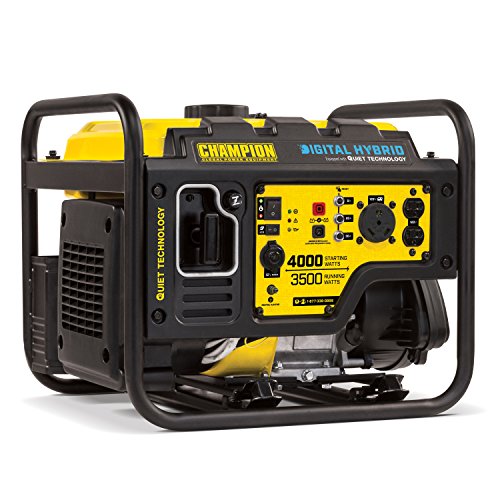
Champion’s open-frame inverter design offers an excellent balance of power, quiet operation, and durability. It is notably 50% quieter and 20% lighter than traditional generators, producing only 64 dBA of noise. This makes it suitable for use in neighborhoods or at campsites without causing a major disturbance.
It provides 4000 starting watts and 3500 running watts, with an impressive run time of up to 17 hours on a single tank of gasoline. The Economy Mode feature helps save fuel and reduce wear on the engine. Its clean power output protects sensitive devices, and the 30A RV outlet ensures it can handle your travel trailer’s needs.
WEN 4750-Watt Portable Generator with Electric Start

The WEN 56475 is a robust and practical choice for home backup, offering a substantial 4750 watts of peak power. The electric start feature ensures a quick and easy startup every time, which is particularly valuable during an unexpected outage. Its digital readout is a helpful tool for tracking maintenance schedules and oil change intervals.
This model includes several important safety features, such as low-oil shutdown and overload protection, which help prevent damage to both the generator and your connected appliances. It is compliant with CARB and EPA III standards, meaning it can be purchased and used in all 50 states.
DuroStar DS4000S Portable Generator
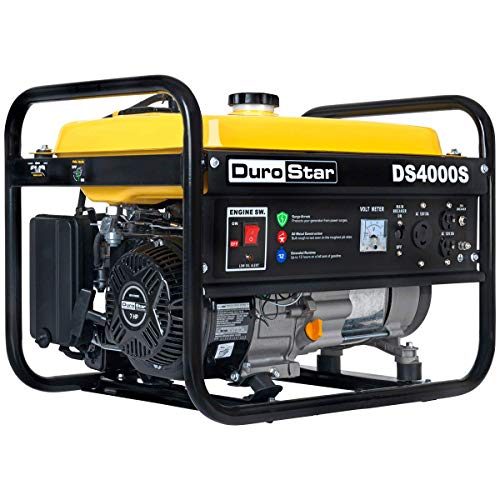
The DuroStar DS4000S is a classic, dependable workhorse built around a powerful 208cc OHV engine. It delivers 4000 peak watts and 3300 running watts, capacity that can handle a simultaneous mix of essential home appliances and even some high-amperage power tools. This makes it a versatile unit for both emergency backup and job site use.
Durability and engine protection are key focuses. The sturdy steel frame is designed for longevity, and the low-oil shutoff sensor automatically turns the generator off if oil levels become too low, preventing costly engine damage. It’s a straightforward, no-frills generator focused on reliable performance.
Pulsar 4000W Quiet Inverter Generator with Remote Start

Pulsar’s PG4000iSR combines the benefits of quiet inverter technology with the premium convenience of wireless remote start. You can operate the generator from up to 80 feet away, a feature that adds a layer of comfort and accessibility during poor weather. It produces clean power suitable for electronics.
With 4000 peak watts and 3500 running watts, it provides ample power for home essentials. It also boasts an efficient run time of up to 15 hours at half load, helping you conserve fuel during extended outages. The parallel capability allows you to connect a second compatible unit to double your available power if needed in the future.
DuroMax XP13000HX Dual Fuel Portable Generator

For those seeking maximum power and fuel flexibility, the DuroMax XP13000HX is a top contender. Its 13,000-watt output is capable of backing up an entire house, powering multiple large appliances simultaneously. The dual-fuel capability allows you to run it on either gasoline or propane, giving you options based on fuel availability and cost.
It’s built with a robust 500cc engine and features all-copper windings for superior durability and performance. The integrated CO Alert technology monitors carbon monoxide levels, enhancing safety for your household. This is a serious generator designed for whole-home backup and is transfer switch ready.
Westinghouse WGen9500DF Dual Fuel Portable Generator
The Westinghouse WGen9500DF is another powerful dual-fuel option, providing substantial power for major home backup needs. The ability to choose between gasoline and propane offers great flexibility; propane stores for longer periods, making it an excellent emergency fuel source. This generator is designed to handle heavy loads with ease.
It features a convenient electric start for reliable ignition and is built with a durable steel frame. Like other Westinghouse models, it is designed to be transfer switch ready, allowing for a smoother connection to your home’s electrical panel. This generator is for users who prioritize high wattage and fuel choice.
Generac 7676 GP8000E Portable Generator
Generac is a trusted name in backup power, and the GP8000E model offers robust performance for home use. With 8000 watts of starting power, it can keep critical systems running during an outage. Its design focuses on durability and straightforward operation, making it a reliable choice when you need it most.
It includes multiple outlet options to accommodate various appliances and tools. The engine is built for endurance, and the unit features a long-run fuel tank to extend operation time between refueling. This generator represents a solid, powerful option from a well-established manufacturer in the power equipment industry.
How to Choose a 4000-Watt Generator for Home Backup
When you’re looking at the 8 best 4000-watt generators for home backup, it can feel like a lot to sort through. I always start by thinking about what I really need to power. A 4000-watt generator sits in a great spot—it’s strong enough to run essential home systems like a fridge, some lights, a well pump, and maybe a window AC unit, but it’s usually more portable and affordable than a massive whole-house unit. The key is matching the generator to your specific situation.
First, figure out your power needs. I make a list of the absolute essentials I want to keep running during an outage and add up their starting (surge) and running watts. This total tells me if a 4000-watt model is right for me. Remember, you’ll rarely use all 4000 watts at once; you’ll need to manage what you plug in.
Next, decide on fuel type. Most in this class are gas-powered, which is widely available. Some are dual-fuel, meaning they can also run on propane. I like propane because it stores for a long time without going bad, which is perfect for emergency backup. Then, consider the run time. Look at how long it can run on a single tank of fuel at a 50% load. A longer run time means less frequent refueling, which is a big plus in a multi-day outage.
Noise level is a huge factor, especially if you have close neighbors. Inverter generators are much quieter than traditional open-frame models. They also provide “cleaner” power that’s safe for sensitive electronics like laptops and phones. If you need to power a home office setup, an inverter is the way to go. Finally, look at the outlets. Make sure the generator has the right types and enough of them for your planned devices, and that it includes vital safety features like a circuit breaker and, ideally, a low-oil shutoff to protect the engine.
FAQ
What will a 4000-watt generator actually run in my house?
It can handle a combination of essential items. Think of it as powering your refrigerator (600-800 running watts), a well pump (1000-1500 surge watts), several lights and fans, a TV, and charging phones. You could also run a window air conditioning unit (1000-1500 watts) or a sump pump. You can’t run everything at once, but with careful management, it keeps your home’s critical systems going.
What’s the difference between a traditional and an inverter 4000-watt generator?
A traditional generator uses a simpler engine that runs at a constant speed to produce power. It’s often more affordable and powerful for its size but is louder and produces power that can be rough on sensitive electronics. An inverter generator adjusts its engine speed to match demand, making it quieter, more fuel-efficient, and producing very stable, clean electricity that’s perfectly safe for computers, medical devices, and other delicate gear.
How important is a dual-fuel feature for home backup?
I think it’s a fantastic option. Gasoline doesn’t store well for long periods; it can degrade and gum up your carburetor. Propane, stored in tanks, lasts indefinitely. Having the choice to run on propane means your fuel supply is more reliable for emergencies. It also burns cleaner, which can mean less maintenance for the engine over time.
Can I connect a 4000-watt generator directly to my home’s electrical panel?
Never plug a generator directly into a wall outlet. This is extremely dangerous and can backfeed power into utility lines, risking the lives of line workers. To power hardwired home circuits safely, you must have a qualified electrician install a transfer switch. This isolates your home from the grid and allows you to connect the generator to specific circuits via a dedicated inlet box.
What are the key safety tips for using one of these generators?
Always operate it outdoors, far from windows and doors, to prevent carbon monoxide poisoning. Let it cool before refueling. Use heavy-duty, outdoor-rated extension cords. And, as mentioned, if you’re connecting to your home wiring, a transfer switch is non-negotiable. Storing fuel safely away from living areas and heat sources is also critical.