Choosing the right flux core welder can transform your DIY and repair projects from frustrating to fantastic. These versatile, gasless machines are perfect for home hobbyists, offering a simpler setup than traditional MIG welders while still delivering strong, clean welds on steel. Whether you’re fixing a fence, working on auto body panels, or tackling a creative metal project, a good flux core welder is an invaluable tool for your workshop.
With so many options on the market, finding the best one for your needs and budget is key. Our roundup features eight top-rated models, from compact beginner units to more advanced multi-process machines. We’ve evaluated their power, features, and ease of use to help you make an informed decision and find the perfect welder to bring your metalworking ideas to life.
Our Top Picks for Flux Core Welders
- VIVOHOME MIG Welder 130 Flux Core Wire Automatic Feed Welding Machine
- LOTOS MIG140 140A MIG Welder Advanced Auto MIG Synergistic Setting
- display4top Mig Welder, 130A Portable Welding Machine, Flux Core Wire Welder
- Forney Easy Weld 299 125FC Flux Core Welder, 120-Volt
- Sunstac MIG Welder, 140A 110V Flux Core/Stick/Lift TIG 3 in 1 MIG Welding Machine
- Forney Easy Weld 261, 140 FC-i Flux Core Welder
- Hobart Handler 140 MIG Welder
- Lincoln Electric K2278-1 Handy MIG Welder
VIVOHOME MIG Welder 130 Flux Core Wire Automatic Feed Welding Machine
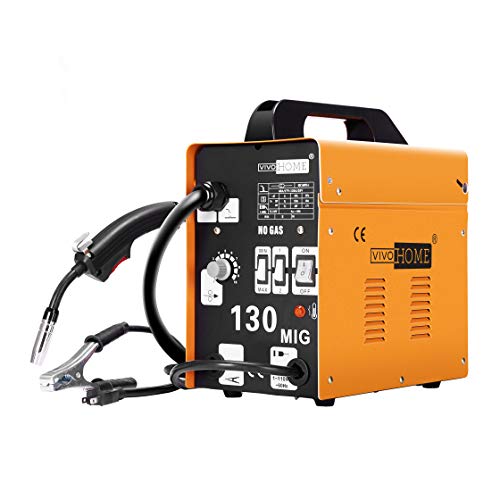
This VIVOHOME model is a strong contender for home repair enthusiasts and hobbyists. Its gasless, flux-core design makes setup straightforward, eliminating the need for external gas cylinders. The machine is well-suited for working with mild steel and stainless steel on projects like auto body work or light gauge steel fabrication.
Control is a highlight, with four current settings and a 10-speed variable wire feed. This allows for fine-tuning to match your material thickness, helping to achieve a clean, professional finish. As a portable 110V/120V unit, it plugs into standard household outlets, adding to its convenience for DIY use in the garage or workshop.
LOTOS MIG140 140A MIG Welder

The LOTOS MIG140 steps up with advanced features for users seeking more precision. Its dual digital displays for voltage and wire speed provide clear, exact readings, allowing for highly repeatable settings. This 140-amp machine handles a good range of material, from 24-gauge sheet metal up to 3/16-inch thick steel.
It offers versatility by supporting both gasless flux core and gas MIG welding. The inclusion of a 2T/4T trigger mode is a significant benefit for longer welds, reducing hand fatigue. Built with a durable aluminum wire feeder, it promises stable performance and consistent wire feeding for smoother welding sessions.
display4top Mig Welder, 130A Portable Welding Machine

For those prioritizing portability and simplicity, the display4top 130A welder is a compact and capable option. Its all-in-one design includes a welding mask, making it a ready-to-use kit for beginners. The automatic wire feed simplifies the learning curve, letting you focus on your technique.
Operating on a standard 110V outlet, this machine is easy to power up in any home garage. Its flux core, gasless operation keeps costs down and increases mobility. This model is ideal for light to medium-duty repairs, fabrication, and hobby projects where a straightforward, effective tool is needed.
Forney Easy Weld 299 125FC Flux Core Welder
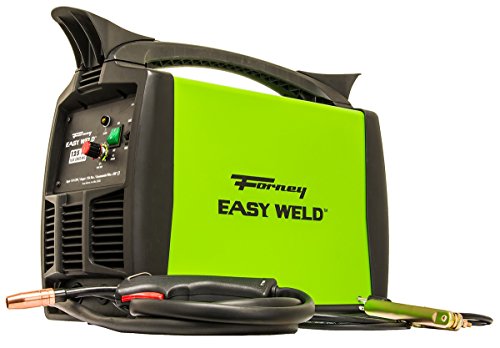
The Forney Easy Weld 299 lives up to its name by providing a user-friendly entry point into welding. This dedicated flux core machine is designed for gasless operation only, streamlining the process. With a 125-amp output from a 120V plug, it balances capability with accessibility for home users.
It is rated to weld materials from thin 24-gauge metal up to 1/4-inch thick, covering many common repair and project needs. Forney’s reputation for building durable, easy-to-operate tools is evident here. This welder is a solid, no-fuss choice for someone who wants a reliable performer for basic tasks without complex settings.
Sunstac MIG Welder, 140A 110V Flux Core/Stick/Lift TIG 3 in 1

The Sunstac SS-140M stands out as a versatile, multi-process machine packed with modern features. Its primary function is as a gasless flux core welder, but it also supports Stick and Lift TIG welding (TIG torch sold separately). This makes it an excellent long-term investment for a growing workshop.
It features an easy-to-read LCD digital screen and intelligent synergic control. This technology automatically coordinates wire speed and voltage when you adjust the current, simplifying setup and improving results, especially for beginners. With overload protection and a 140-amp output, it’s a smart, capable welder for ambitious DIYers.
Forney Easy Weld 261, 140 FC-i Flux Core Welder
The Forney Easy Weld 261 builds on the brand’s reputation for user-friendly tools with increased power. As a 140-amp inverter-based flux core welder, it offers improved electrical efficiency and a more compact, lighter design compared to traditional transformer models. This makes it easier to move around a job site.
Inverter technology often provides a more stable arc and better performance on household circuits. This model is designed for gasless flux core welding, maintaining simplicity while offering the extra power needed for slightly thicker materials or longer welding sessions. It’s a good step-up option for those who have outgrown an entry-level machine.
Hobart Handler 140 MIG Welder
The Hobart Handler 140 is a highly respected name in the home welder market, known for its durability and smooth performance. While it is a full MIG welder capable of using gas for the cleanest welds, it also runs gasless flux core wire perfectly. This gives you the flexibility to choose your process based on the project.
It delivers a reliable 140 amps, suitable for welding mild steel from thin 24-gauge up to 1/4-inch thick. The machine is built with quality components, like a solid wire drive system, that hobbyists and professionals alike trust. For someone wanting a versatile, dependable 120V welder that can grow with their skills, the Handler 140 is a top-tier choice.
Lincoln Electric K2278-1 Handy MIG Welder
Lincoln Electric’s Handy MIG is a compact and purpose-built tool designed for small jobs and quick repairs. Its ultra-portable, all-in-one design includes the wire spool inside the gun, making it exceptionally easy to transport and use in tight spaces. It operates on a standard 120V household outlet.
This welder uses self-shielded flux core wire, so no gas is required. It’s ideal for light-duty tasks like fixing lawn furniture, automotive exhaust work, or other thin-gauge steel repairs. While not for heavy fabrication, its convenience and the backing of the Lincoln Electric brand make it a popular “grab-and-go” solution for specific needs.
Buying Guide: How to Choose the Best Flux Core Welder
So you’re looking at getting a flux core welder. Smart move. This process is fantastic for beginners and pros who need a tough, portable machine that can handle less-than-perfect metal. But with a ton of options out there, picking the right one can feel like a chore. Let me walk you through what actually matters when you’re comparing the 8 best flux core welders.
First, think about your power source. Are you mostly in a garage with a solid 240V outlet, or are you out in the field needing to plug into a standard 120V household socket? Machines that run on 120V are super convenient and can handle a lot of common jobs, but they have limits on thickness. If you’re planning to weld material over 1/4″ thick regularly, you’ll want the extra oomph of a 240V machine. Some welders even offer dual-voltage capability, which is a huge plus for flexibility.
Next up is amperage range. This directly controls the heat and dictates what thickness of metal you can work with. A wider range gives you more versatility. Check the machine’s specs for its “metal thickness range.” Be a little skeptical of the maximums—they’re often for ideal, clean conditions. For a solid all-around home and farm machine, a unit that can comfortably handle 3/16″ to 1/4″ material is a great target.
Don’t overlook the duty cycle. This is the number that tells you how long you can weld continuously out of a 10-minute period before the machine needs to cool down. A 20% duty cycle at 130 amps means you can weld for 2 minutes, then cool for 8. For hobbyists, this is often fine. If you’re doing long, continuous beads or production work, look for a higher duty cycle (40% or more) so you aren’t constantly waiting.
Finally, consider the extra features that make life easier. A good wire feed system with multiple speed settings is crucial for a stable arc. Thermal overload protection is a safety must-have that prevents the welder from burning itself out. Things like a built-in gas valve (if you ever want to switch to MIG), a carry handle, and a good quality gun with a comfortable grip might seem small, but they make a big difference in your daily experience. Focus on what you’ll really use, and you’ll find a great match.
FAQ
Can I use a flux core welder indoors?
You can, but you must have excellent ventilation. Unlike MIG welding with shielding gas, flux core welding creates a lot of smoke and fumes. That smoke isn’t just unpleasant; it can be harmful to breathe. I always use a fan to pull the fumes away from me and work in a wide-open garage door or under a dedicated exhaust hood. A proper respirator is also a very good idea for any extended indoor welding session.
What’s the main difference between flux core and MIG welding?
The core difference is in how the weld pool is protected from the air. MIG (Metal Inert Gas) welding uses a tank of external gas (like argon/CO2 mix) to shield the weld. Flux core uses a wire that has flux material inside its core. When this wire melts, the flux creates a gas shield and also forms a slag layer over the weld. This makes flux core much more portable (no gas tank) and better for windy or dirty conditions, but it usually creates more spatter and smoke than a clean MIG weld.
Do I need to use gas with a flux core welder?
For the typical “self-shielded” flux core wire (often labeled as FCAW-S), no, you do not need gas. The flux inside the wire does all the shielding work. This is the big advantage. There is also a type called “gas-shielded” flux core wire (FCAW-G), but that’s less common for home machines. When you’re looking at the 8 best flux core welders for DIY use, you’re almost certainly looking at self-shielded machines that run without a gas cylinder.
Why is there slag on my weld, and what do I do with it?
That slag layer is a normal and necessary part of the flux core process. It’s the solidified protective layer that forms from the flux material. After you finish a weld bead and it cools for a moment, you simply chip it off with a slag hammer and then brush the area clean with a wire brush. A clean weld will be shiny and smooth underneath the slag. If the slag is hard to remove or the weld looks porous, your settings might be off.
Can I weld thin metal, like car body panels, with a flux core welder?
You can, but it’s tricky. Flux core runs hot and can easily burn through thin sheet metal. If thin gauge work is your primary goal, a MIG welder with gas is often a better, cleaner choice. However, if you only have a flux core machine, use the smallest diameter wire you can (like 0.030″), set the voltage and wire speed as low as possible, and practice a lot on scrap metal first. Using a “stitch” or “tack” welding technique, rather than a continuous bead, helps prevent warping and burn-through.